When buying a racing paddle board (SUP), it can be really daunting as there are just so many questions you need to answer to get the right board for you. This can include: what length do I get? What width? What conditions will I paddle in? What’s most important — stability or speed? More or less volume? And the list goes on… today we are going to try to make it that little bit easier to make your decision.
Board Length – 12’6” vs 14’
In SUP racing, there are mainly two popular race classes today: 12’6 and 14’. Before we go into more details about the classes, let’s understand how board length can affect the characteristics of a race SUP.
Length is a supercritical factor to consider when choosing a race SUP for several reasons: A longer board increases its effective waterline, which in turn increases speed (longer boards are faster than short). Longer boards also tend to track straighter, which can improve your straight-line speed. They can also increase the wetted surface area, which makes them more buoyant and better for heavier riders.
On the other hand, shorter race boards are more manoeuvrable and easier to perform a buoy kick turn on, as you don’t have to step back as far (where it can get wobbly) to disengage the nose. Shorter race SUPs also perform better in beach races as they surf waves more easily.
So which board length should you choose?
The 14’ board class is the most popular class worldwide, with major events promoting this as the primary race class — so most paddlers should be looking at a 14’ race board as their first choice. However, many races have 14’ under divisions where you can race on 12’6 or shorter boards, but you will likely compromise speed. Shorter boards can work better in surf or sprint races with lots of turns.
Unlimited boards are rare and not part of Starboard’s current range. These are specialized downwind boards around 18 ft long, designed for open ocean downwind races.
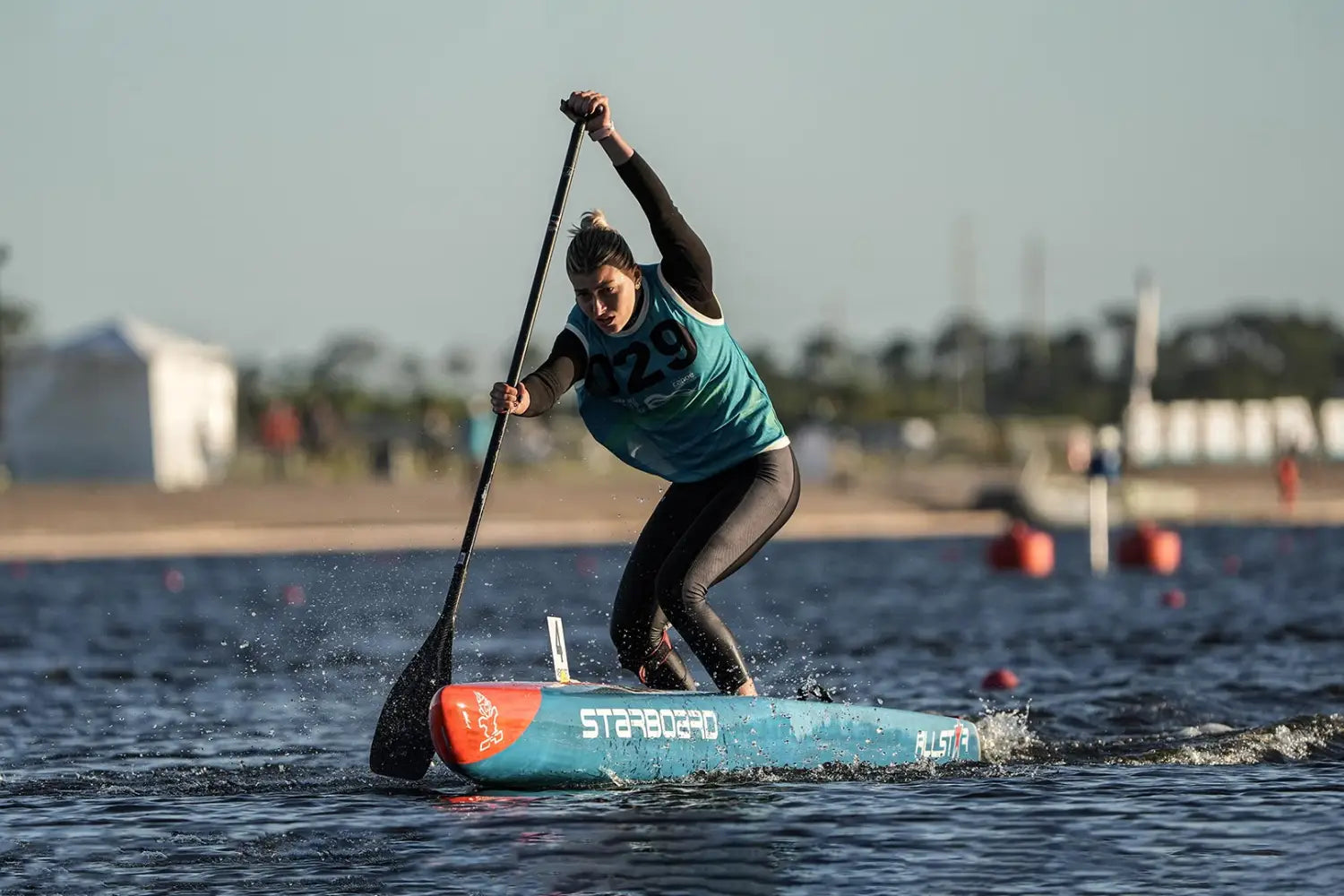
14-foot race boards:
- Faster with better glide.
- Track straighter over long distances.
- Ideal for heavier paddlers or flatwater races.
Tip: Most competitive racers choose 14’ boards for all-round performance.
12’6 race boards:
- More agile in turns.
- Easier for technical courses and surf races.
- Suited for lighter paddlers.
Board width – Balancing speed & stability
Width is probably the most crucial factor for new riders getting into SUP racing. Width directly affects stability — and being stable enough to paddle well is key to having a good race or session.
While elite riders can ride boards 21” wide or narrower, most paddlers should start looking at boards around 23” wide on the narrow end for intermediate to advanced paddlers. Beginners should start wider at 24.5” or 26” before moving to narrower, faster boards.
Width is crucial for stability.
21”–23”: Narrow, for advanced racers.
24.5”–26”: Stable, best for beginners.
If you’re new to SUP racing, start wider for stability before moving to a faster, narrower board.
Hull shape – Displacement vs Planing
Planing and displacement are the two main hull types to consider when deciding on what race board to get. The major difference is how the board travels through the water.
– Displacement:

Boards with displacement hulls have a concave (or series of concaves) bottom shape. The main benefit of this design is that you can go narrower for increased speed, as it offers more stability. The hull slices through the water, pushing water around the nose to the sides, improving efficiency and creating a fast, smooth ride. These boards track straight but tend to be less manoeuvrable.
Typically, displacement hull race SUPs are best for flatwater racing and long-distance courses.
– Planing

Planing hulls have a flat or convex V-shaped bottom contour. They are designed to skim on top of the water at high speeds, making them more manoeuvrable. These boards usually have a flat tail. They are great for ocean or choppy water, and technical course racing where quick turns are key.
Board Volume
When it comes to board volume, factors like weight capacity and board buoyancy in key areas are crucial.
If the board doesn’t displace the correct amount of water for your weight, you won’t be well supported and the board may feel unstable. Board volume and weight capacity are two factors that affect how stable you will feel and how well the board will travel through the water. Generally, a lighter person and a heavier person should not be riding the same board. Make sure you have a look at the weight limits of the boards when making your board choice.
Buoyancy provided in key areas like in the deck and tail can help improve performance characteristics. A good amount of volume on the deck can help to create lift or ‘pop’ when piercing through waves or swell, preventing the board from diving too deep or wallowing. The tail of a race board also requires a good amount of volume for the step back ‘kick’ turn and prevent sinking, as well as floatation for improved slip/ wave riding, also for it to pick up on bumps.
Construction – Hard Boards vs Inflatable Race SUPs
Why and how do we choose between a composite (hard) and an inflatable paddleboard? Choosing which race board construction basically comes down to performance versus convenience compromise.
Hard boards deliver far greater performance over their inflatable counterparts. They accelerate, glide and respond much better than an iSUP while being roughly 20 – 25% faster in comparison. A solid board is also more rigid than an inflatable board, which can provide a more stable feel, especially in races when conditions can get rough.
What an inflatable race board lacks in performance, it sure makes up for with convenience benefits. The fact that it rolls up into a super compact wheelie backpack means storage and transport is a breeze. It can easily be stowed in small spaces when deflated, like a closet or a car’s trunk.
If you’re taking a road trip or hopping on a plane to get to a race, you can bring along your inflatable SUP and pump it up when you reach your destination. Packed away in its storage bag, an inflatable can be checked on an aeroplane or stowed in a train, bus or car.

If performance is the priority, go hard. If portability matters most, choose inflatable.
Hard boards: 20–25% faster, better glide, more rigid.
Inflatable boards: Easy to store and transport, ideal for travel.
Essential Race Features
There are many other board features that are important when choosing a race board; race handles (and their positions), leash attachments, deck pad, tail kick pad, and FCS mounts for GPS.
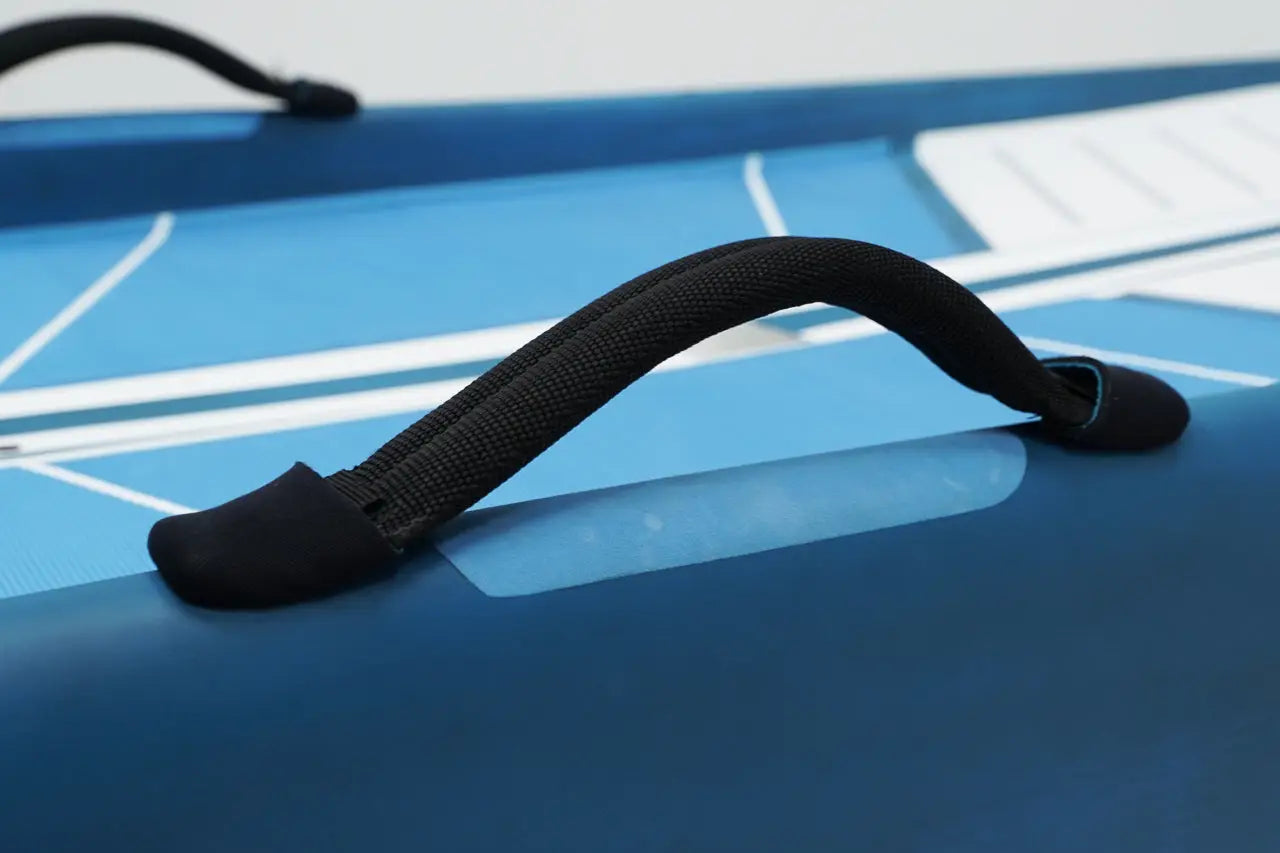
Race handles
Firstly a good handle position that you’re comfortable with is very important. Some riders like to have a strap or two on the rail or drag strap while others are just happy with the centre handle.
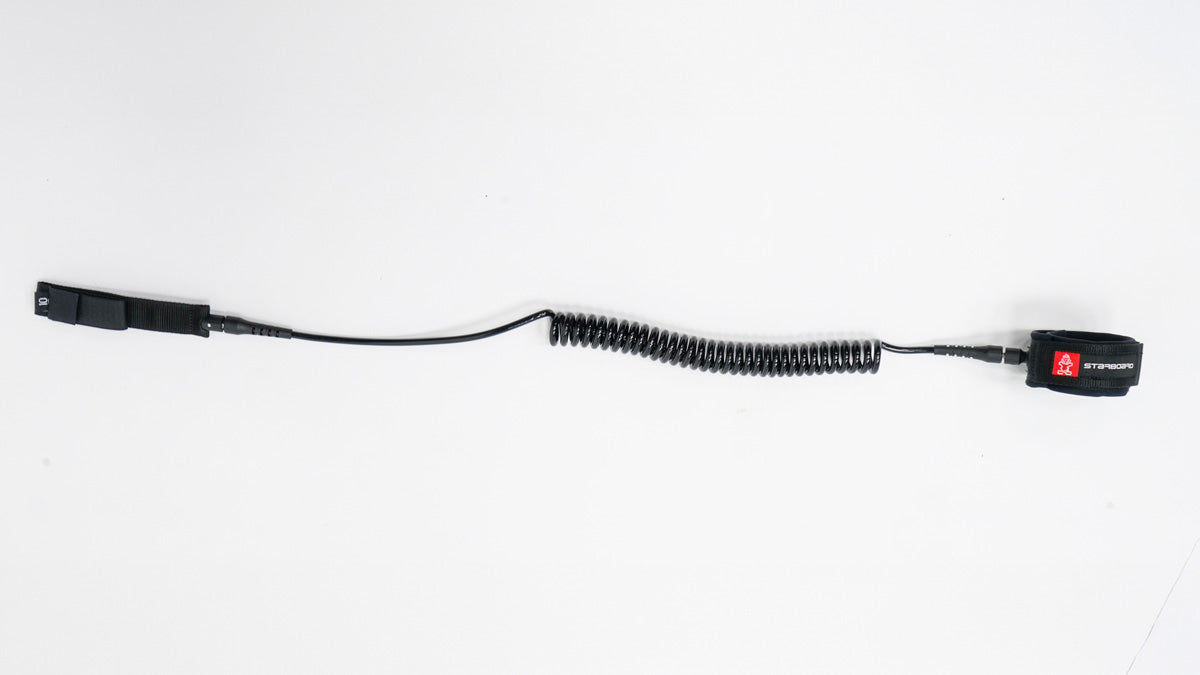
Leash
Leash attachments are important; flat water racers generally use the attachment in front of them. Ocean and sprint racers tend to attach the leash behind them.
Explore Leash collection >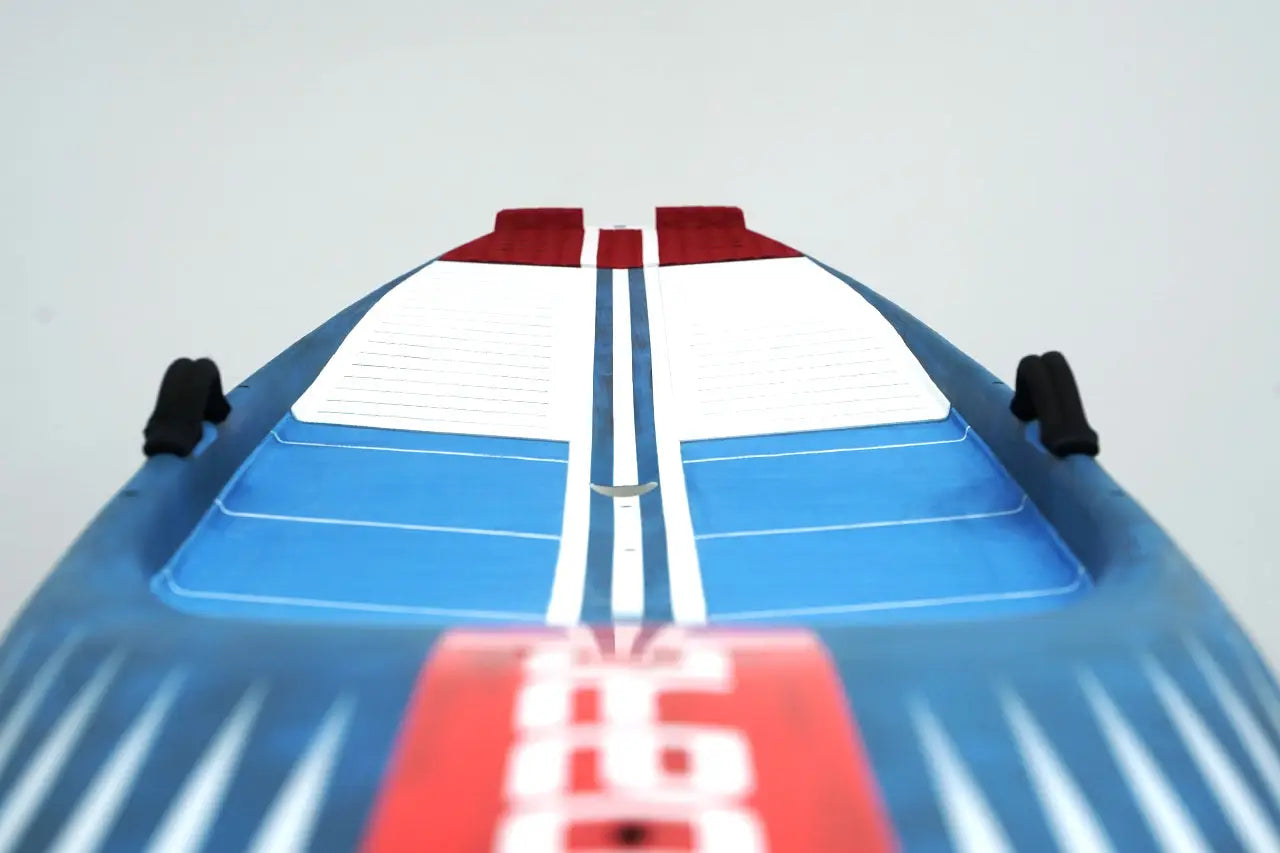
Deck pad
Deck pads are pivotal for turning and grip. They provide quick turning ability and comfort to catch waves to the beach.
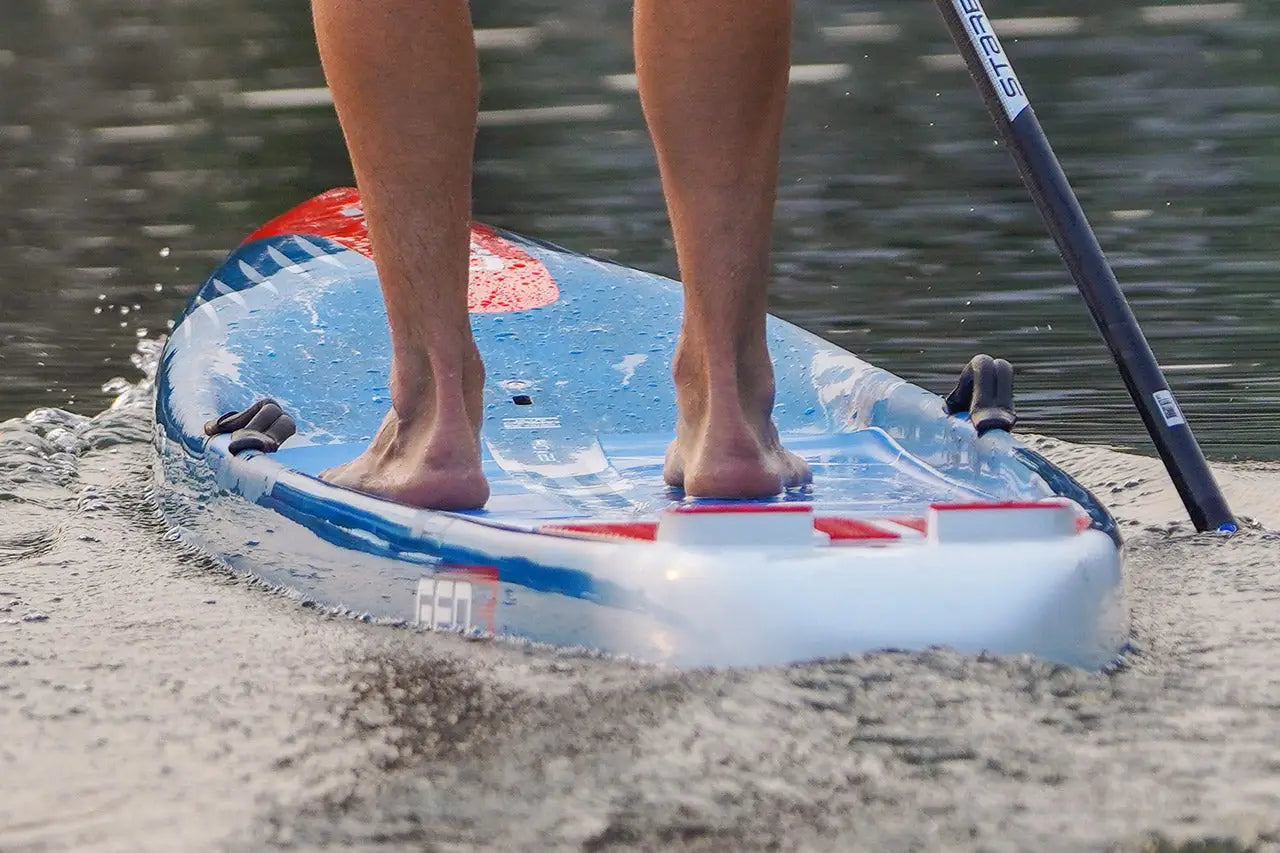
Tail kick pad
A tail kick pad helps riders feel the back of the board without looking, aiding control during wave riding and buoy turns.
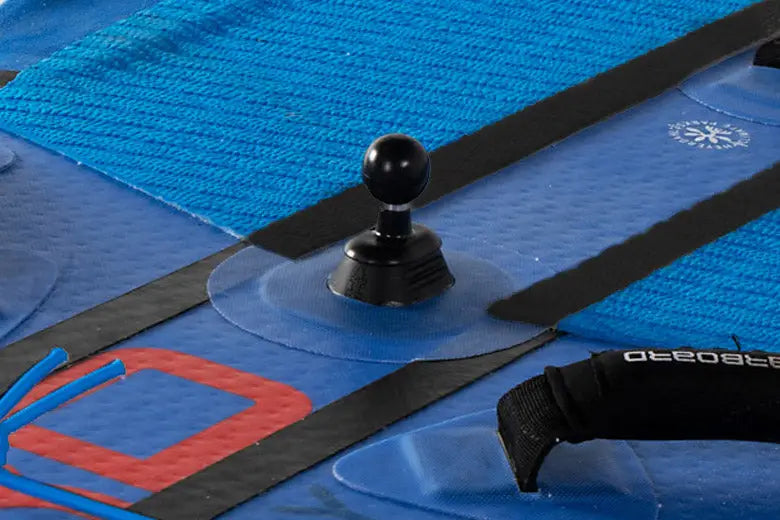
Mounts
Mounts for GoPros or GPS devices let you track sessions and capture selfies with friends.
Durability & Impact Resistance
SUP racing is a full-contact sport. Your race board needs to handle impacts from other riders’ boards and paddles. Choose quality composite materials reinforced in critical areas to withstand impact.
Every race is a journey — from the first paddle stroke to the final buoy turn. The right racing paddle board isn’t just equipment; it’s your partner on the water. Whether you’re chasing personal bests, podium finishes, or simply the thrill of speed, Starboard boards are designed to help you push further, paddle faster, and ride cleaner.
From calm lakes to ocean swells, let your board carry you toward your next victory. See you at the start line.