Filter
Sort by:
ATTENTION: BEWARE OF SCAM & FRAUD WEBSITES
VERIFY YOU'RE VISITING OUR OFFICIAL SITE
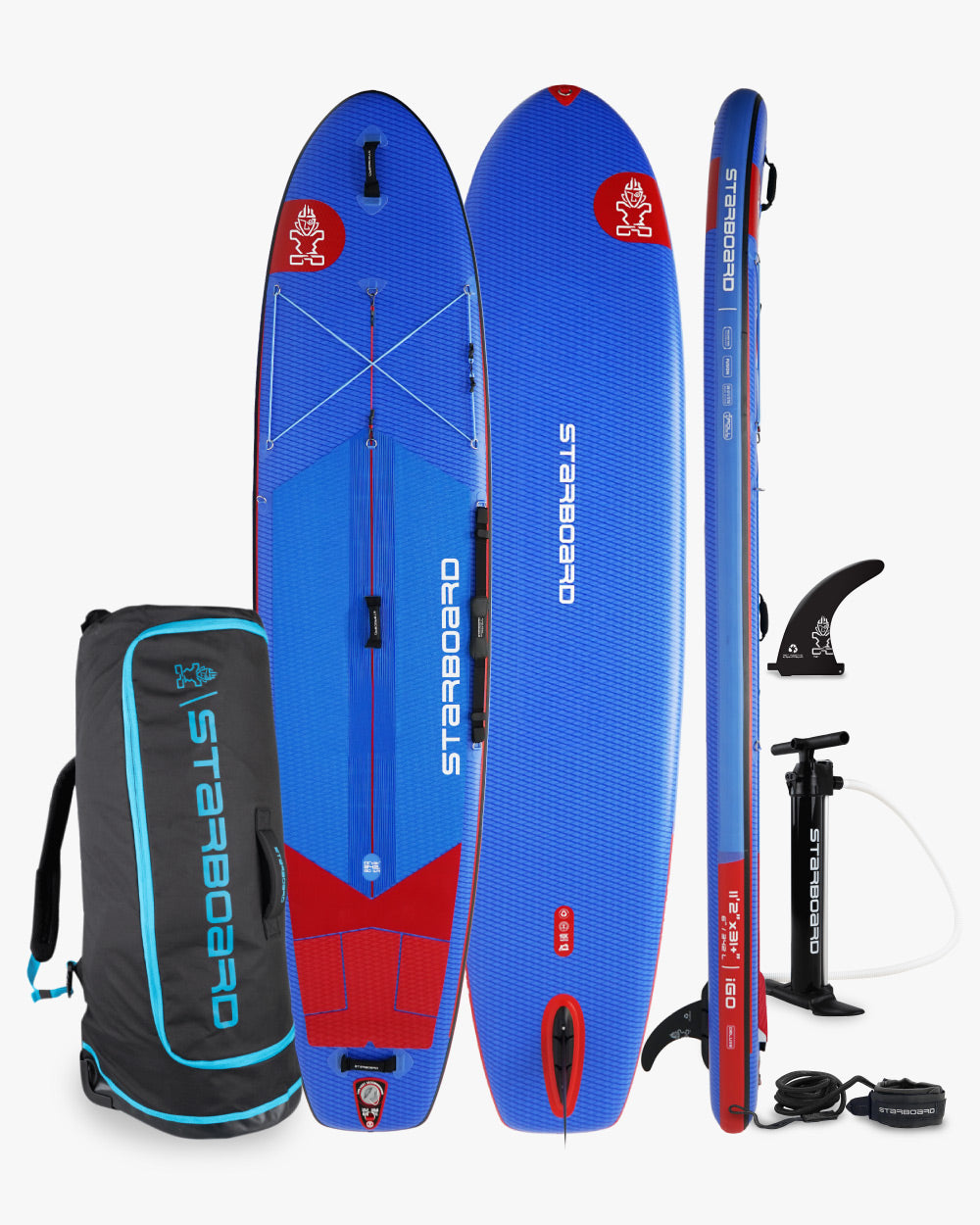
Starboard’s Deluxe Lite Inflatable Paddleboards offer the ultimate blend of lightweight design, compact storage, and high performance. Featuring Woven Dropstitch technology and patented Roll Technology, these boards are up to 2kg lighter and 33% more compact when packed, making them the perfect travel-friendly choice for entry-level paddlers.
Sort by:
Best Entry-level Inflatable Paddle Boards: Introducing The Deluxe Lite Range. The Deluxe Lite is the lightest, most compact, and travel-friendly option from Starboard, without compromising on quality or performance. The Deluxe Lite construction offers unmatched benefits to paddlers. Capitalising on the Woven Dropstitch, it sheds up to 2kg in weight compared to regular inflatable paddle board constructions, resulting in enhanced glide, acceleration, and efficiency.
The patented Roll Technology introduces a 3-piece foldable fin box, reducing the board’s size by 33% when rolled & packed, thereby further enhancing travel and storage convenience.
The best beginner inflatable SUP size for most adults is around 10 to 11 feet long and 32 to 34 inches wide, which gives a stable, forgiving board that is easy to balance on. Width is the most important number when you are starting out: a wider board wobbles less and helps you stand with confidence in your first sessions. Length adds glide and helps the board travel straight, so a board between 10 and 11 feet balances steadiness with easy paddling.
For inflatables, a thickness of 6 inches floats you higher and adds stability, which suits most beginners and heavier riders. Your body weight matters too: as a rule, look for a board with a volume in litres of at least twice your weight in kilograms, so it floats you well. If you are still unsure, or want to share the board with family, choose the wider, higher-volume option, since extra stability is always easier to learn on.
Most people learn the basics of stand-up paddleboarding within their first session. On a stable, wide board in calm water, beginners are usually standing and paddling within 10 to 20 minutes, and feel comfortable after an hour or two. It helps to start on your knees, find your balance, then stand one foot at a time with your eyes on the horizon rather than your feet. Falling in once or twice is normal and part of learning. Building real technique, like an efficient stroke and paddling in choppy water, takes a season of regular practice. The easiest way to learn fast is a wide, steady beginner board and a calm, flat spot to start.
For most beginners, a premium board is worth the extra cost, because it is easier to learn on and lasts far longer. The main difference is stiffness. Cheap boards flex and feel soft underfoot, which makes balancing harder and paddling slower, while premium boards use woven drop-stitch and welded construction to stay firm and stable. Premium boards also last longer, often around ten years with care, so the higher price is spread over many more seasons. A budget board can still get you on the water, but if you plan to paddle regularly, a quality board pays for itself in comfort and years of use.
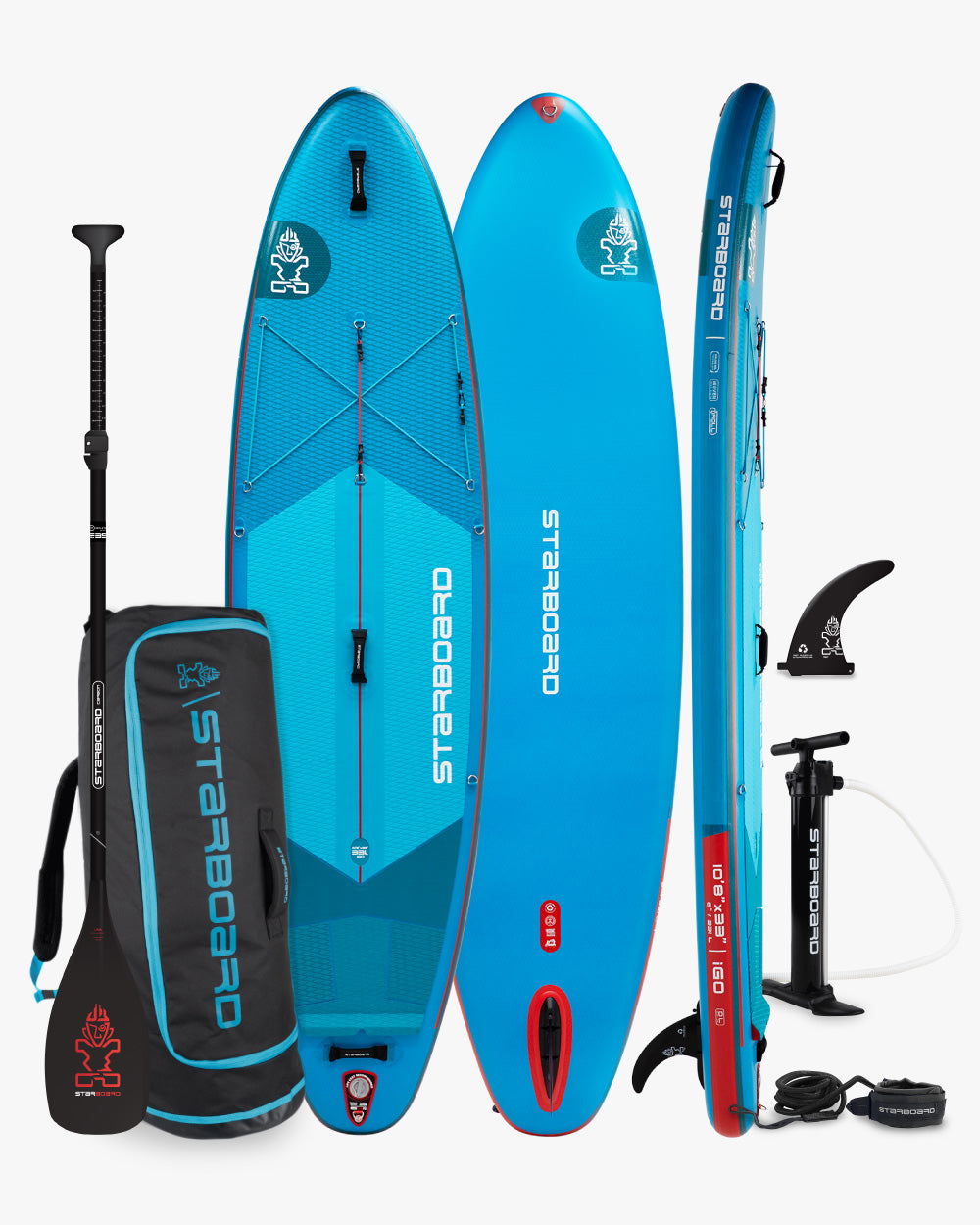
A good beginner SUP package usually includes everything you need to get on the water: the board, a paddle, a pump, a leash, a fin, a carry bag, and a small repair kit. Inflatable packages are the most complete, since they come ready to unroll, pump up, and paddle. Always check the listing, as some boards are sold without a paddle.
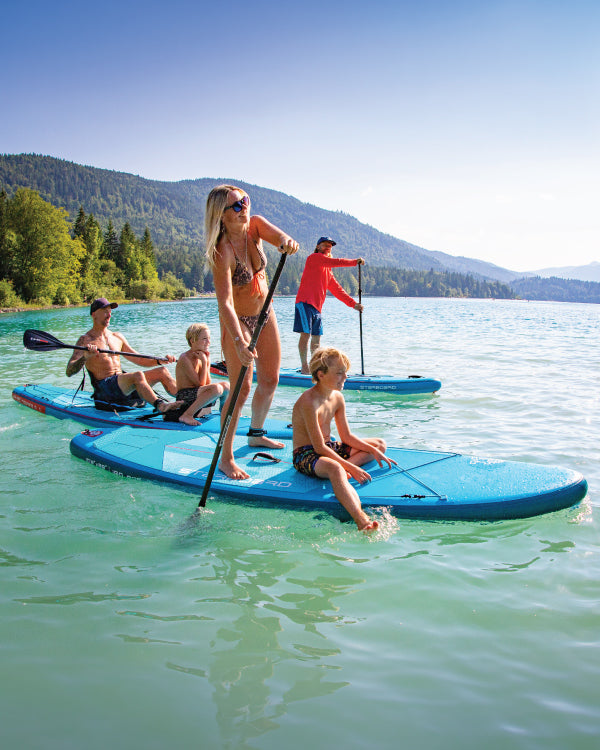
The entry-level SUP by Starboard are a great choice for families because the same board works for both adults and children. A steady board around 32 to 34 inches wide gives kids a secure platform to balance on, and its size means they will not outgrow it as they get older. Younger children paddle most easily on their knees at first, then stand when they feel ready. Safety comes first: always fit them with a properly sized life vest and a leash that keeps the board close, and use an adjustable paddle that shortens to their height. A calm, shallow spot is the best place to start.
Yes, quality inflatable SUPs are safe and highly unlikely to pop or burst unexpectidly. The key is the construction. Boards built with woven drop-stitch and multi-layer PVC are strong and rigid, and they bounce off rocks, docks, and everyday knocks. Cheaper boards made with single-layer linear drop-stitch are far weaker, stretch more, and carry a higher risk of bursting or failing under pressure. With a well-made board, sudden bursting is extremely rare. Even if it is punctured, it loses air slowly rather than all at once, so you can paddle back to shore and fix it with the included repair kit. To keep any board safe, avoid dragging it on rough ground and never leave it fully inflated in strong sun.
Caring for an inflatable SUP is simple and keeps it lasting for years. After every paddle, rinse the board with fresh water to remove salt, sand, and dirt, paying attention to the seams and valve. Let it dry fully before packing it away, since folding it wet can trap moisture and cause mould. Roll it loosely rather than tightly, as loose rolling is kinder to the seams. Store it in a cool, dry place out of direct sunlight, because heat and UV weaken the material over time. Always lift the board by its handle instead of dragging it on rough ground, which can wear through the surface.
Receive product announcements, beginner-friendly tips, & the latest news from our Dream Team.
You may check out all the available products and buy some in the shop
Return to shop