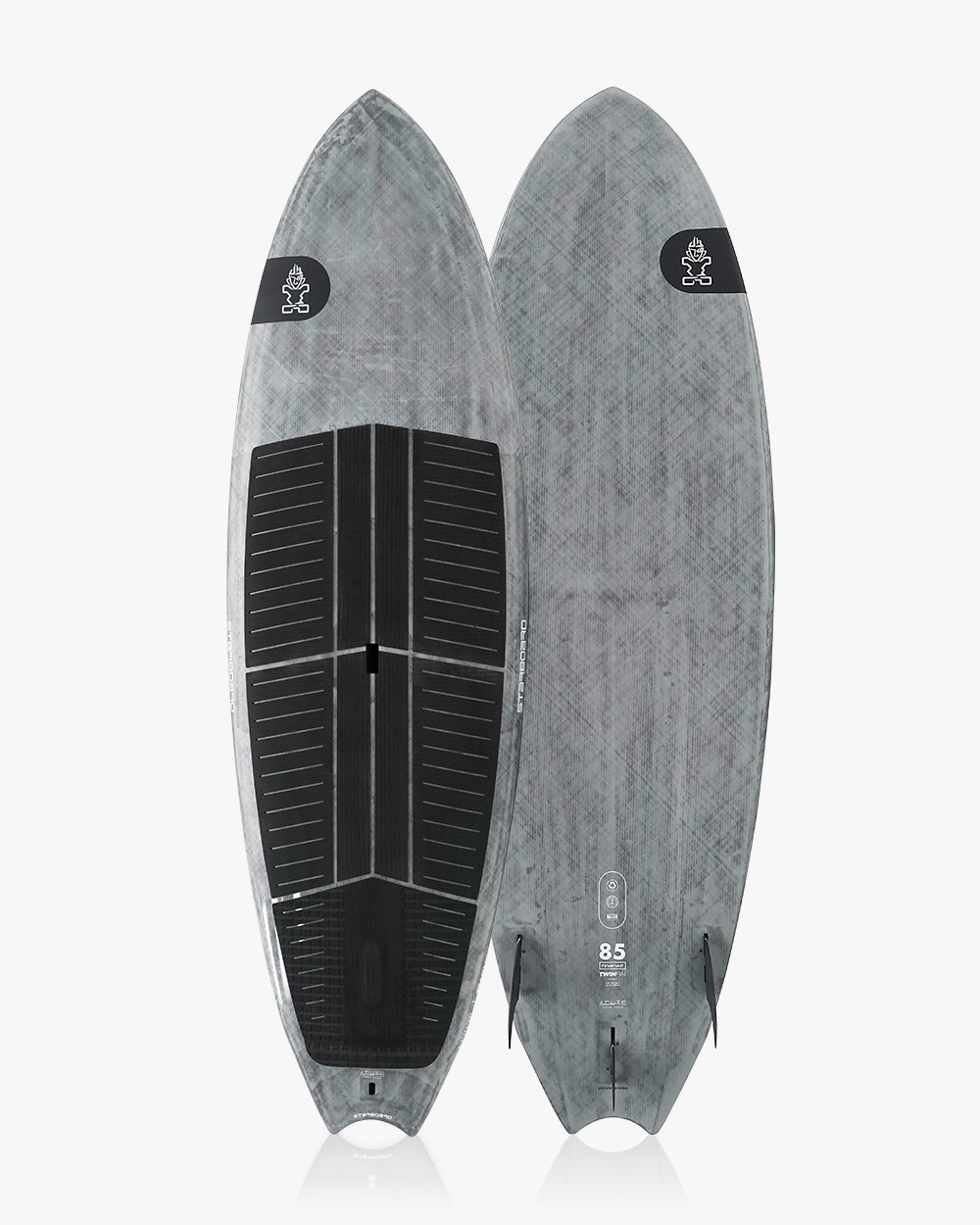
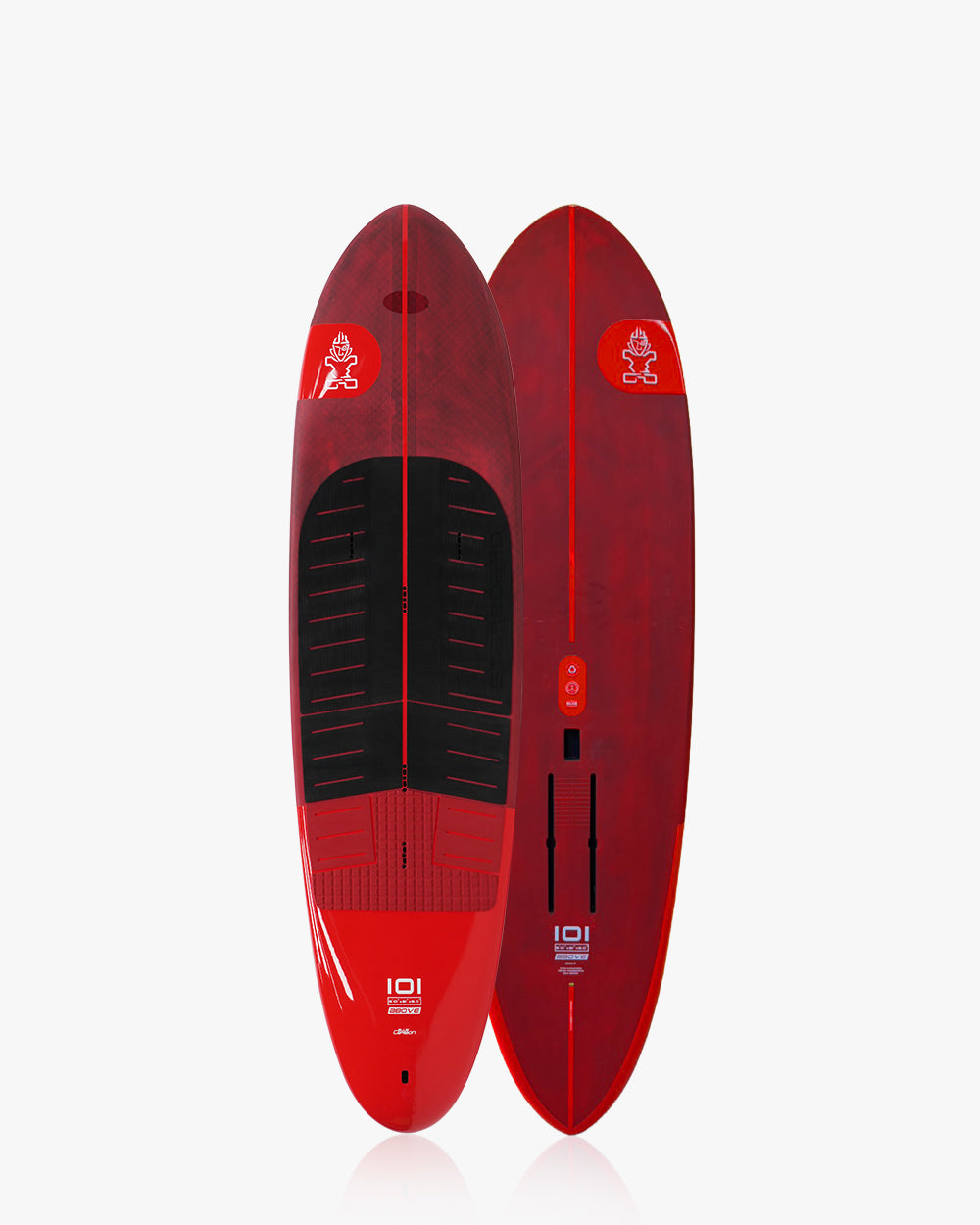
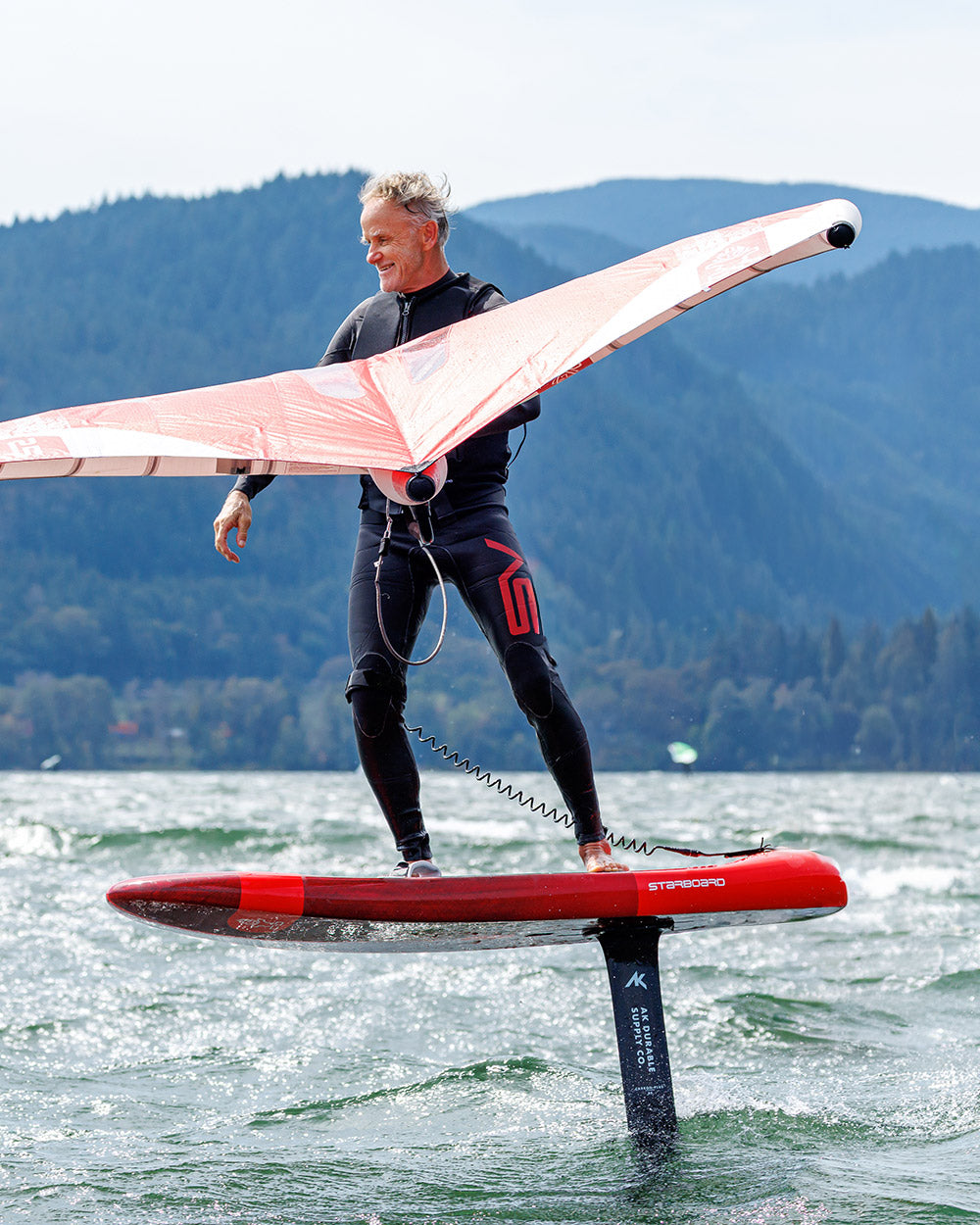
Starboard Brand Director Ollie O’Reilly joins Foiling Magazine to break down Starboard’s latest innovation, D2 Technology. Ollie explains how the dual-density moulded core is engineered to deliver the ideal balance of strength, stiffness and lightweight performance, and how this innovative technology is shaping the next generation of Starboard products.
For anyone hearing about it for the first time, what exactly is D2 Technology, and how does it work in practice?
D2 stands for Dual Density. It is Starboard's name for an advanced moulding technology developed in collaboration with our manufacturing partner, Cobra, to significantly reduce board weight while maintaining structural integrity. The process uses a lighter-density inner EPS core, replacing the traditional 15kg EPS foam, to reduce overall weight. Around this core, a higher-density outer crust is moulded, creating a harder outer shell. This higher-density outer layer allows the external laminate skin to be reduced, resulting in further weight savings while maintaining the board's structural integrity. The result is a lighter, more responsive board with a construction designed to maintain strength while reducing weight.

Is this technology similar in thinking to traditional sandwich construction, or does it represent a completely new step forward?
The concept is similar to traditional sandwich construction in that both aim to maximise strength while minimising weight. However, D2 takes this philosophy a step further by engineering these benefits directly into the EPS moulding process. By strategically using two foam densities within the core, weight savings can be achieved by reducing the amount of external laminate required, making the overall construction more efficient.
What was it you were trying to solve when developing this technology? Was it purely about reducing weight, or was there more to it?
The main focus was to create a lighter board at a competitive price point. Hollow constructions remain the lightest on the market, but that performance comes with significantly higher material and manufacturing costs. With D2, our goal was to reduce weight while maintaining an attractive and accessible price point. D2 is most beneficial on thicker boards, making it particularly well suited to foilboards.

You've managed to reduce the outer laminate skin because of that harder outer layer. How significant is that in terms of weight saving and performance?
It is a key element of the technology. The higher-density outer crust helps support the overall construction, allowing the external laminate skin to be reduced. This creates further weight savings beyond those achieved through the lighter inner core alone. Reducing weight improves overall responsiveness. Lighter boards feel more responsive, accelerate faster, require less effort to get moving and maintain speed more efficiently, both on and off the water.
A lot of brands talk about lighter boards, but riders can understandably be worried about durability. How does D2 balance its low weight with strength and impact resistance?
D2 is designed specifically to address that concern. The higher-density outer crust creates a harder outer shell around the lighter inner core, helping improve resistance to everyday impacts while supporting the overall construction. Rather than simply removing material to save weight, D2 redistributes material more intelligently, placing higher-density material where it delivers the greatest benefit. The result is a lightweight construction designed to balance performance, weight and durability.

Read the full interview in the latest Foiling Magazine.